Concrete Manure Pit: How to Prepare the Base and Wall Pours
A concrete manure pit is usually poured in two stages: the base, then the walls. A lot needs to be checked in between, and most of it has nothing to do with the pump.
Pompage de Béton Express pumps concrete for agricultural structures from Saint-Jérôme to Mont-Laurier. Here is what to prepare before booking and what happens on the day.
The Key Stages of a Concrete Manure Pit
From the engineer's desk to the last mixer truck, each stage has someone in charge.
Approved Plans
Dimensions, rebar, joints and watertightness: everything comes from the engineer's plans, not from decisions on site.
Rules Checked First
Location, permits, obligations: your agronomist and your municipality will tell you what applies to your farm.
Base Slab First
The base is poured over dense rebar; the wall forms then go up on top of it, to be filled another day.
Walls Next
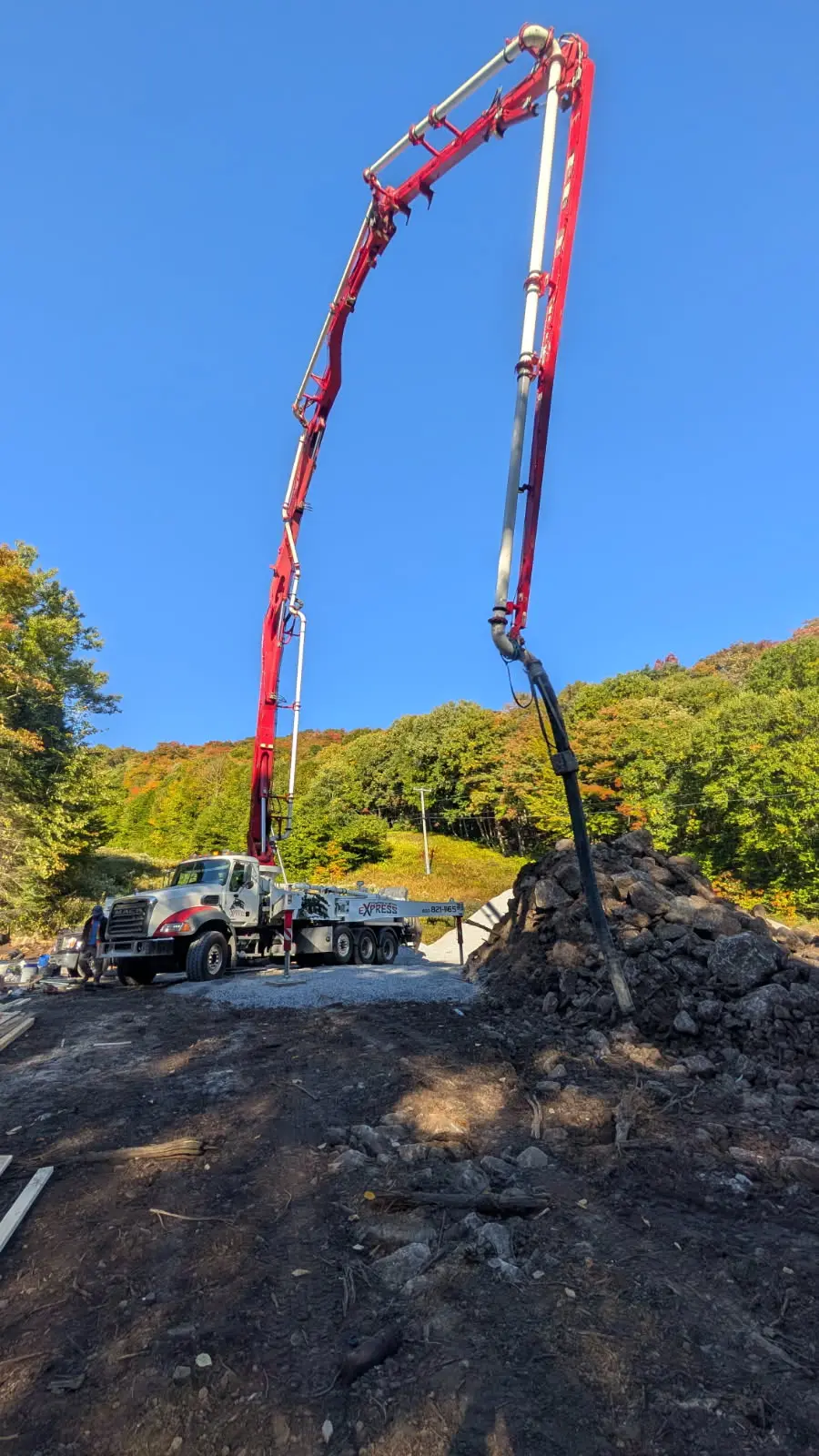
The boom fills the forms from above, one section after another, while the truck waits on solid ground.
What to Confirm Before Booking the Pump
Plans and rules. A manure storage structure is subject to environmental rules. Its location, capacity, watertightness and rebar are set by the engineer who signs the plans, working with the farm's agronomist. They know which permits to apply for; check with your municipality before work begins as well.
The specifications also set the concrete mix and the waterproofing details at the joints. The pumping follows that document: the planned concrete goes where it was planned.
The ground. Around an excavation, disturbed soil and spoil piles don't support a heavy truck well. Pick a firm spot with us, away from any backfill, for the pump truck, along with a solid lane for the mixer trucks, which come back several times.
Think about water too: if the excavation fills up after a downpour, the site crew has to empty it before the concrete arrives. Finally, tell dispatch about any power lines running along the buildings or across the yard. Our guide on getting your lot ready for the pump truck has more pointers.
In Short
For a concrete manure pit, the engineer's plans and the rules checked with your agronomist come first. Pumping then takes two pours: the base, then the walls, usually with a boom pump that reaches into the excavation while the truck stays on solid ground. Pompage de Béton Express pumps the concrete according to those plans; the design remains in the hands of your professionals.
Pouring the Base: A Large Reinforced Slab
The bottom of the pit, also called the base slab, is like a large, heavily reinforced slab sitting at the low point of the excavation. Unfolded above the opening, the boom lowers the hose into it; the finishers guide the end and spread the concrete between the bars.
A few things make all the difference:
- the rebar and waterproofing details have been inspected by the engineer, if required;
- standing water and mud have been removed;
- a safe ladder or ramp lets the crew climb in and out;
- placement continues without interruption, with no unplanned joint.
For a round pit, the boom swings around its base. Depending on the diameter, one truck position can cover the whole floor; otherwise, the truck will need to move partway through. Our team works this out when assessing the site.

Building the Walls: Pouring from Above
Once the base has hardened, the site crew sets up the wall forms around the perimeter. The boom then fills them from the top. The operator moves it from one section to the next, in successive layers, so the level climbs uniformly along every wall; the engineer specifies how to proceed and where a construction joint is allowed.
Mixer trucks need to follow one another without gaps: work out a pace with dispatch that keeps the hopper full until the last wall is done. For every other type of farm work we handle, visit the agricultural pumping section.
Before each of the two pours, go over these points:
| What to Check | With Whom |
|---|---|
| Plans, specifications and pit location | Your engineer |
| Environmental rules and permits | Your agronomist and municipality |
| Rebar and watertight joints | The forming crew, then the engineer |
| Mixer truck route and ground for the pump truck | Our team, with you |
| Power lines and overhead branches | Dispatch, when you first call |
Manure Pit: Frequently Asked Questions
Who draws up the plans for a concrete pit?
An engineer, working with the farm's agronomist to set the capacity, location and watertightness details. Our role comes afterward: once the forms and rebar are in place, we pump the concrete where the plans call for it. Keep a copy on site when the concrete arrives.
Do the base and walls go in on a single day?
Usually not. The base is poured first, then the site crew builds the wall forms on top of it. That makes two separate pours, each booked with dispatch, sometimes with different equipment depending on wall height and the space left for the pump truck.
Can the pump truck stand close to the pit's edge?
As far back as practical: excavation walls can give way under a heavy load. The position is decided with the contractor responsible for the excavation and confirmed on site. That's precisely the advantage of a boom: it lowers the hose into the pit from solid ground, set well back.
Can rain push back the pumping date?
Yes. A flooded excavation has to be emptied before pumping, and soaked ground around the pit can keep the outriggers from being set up. Watch the forecast in the days before and let dispatch know as soon as the ground worries you; a new date beats a stuck truck.
Can an existing manure pit be raised or repaired?
Once the pit has been emptied and cleaned, the concrete portion of such a project is pumped just like new construction, provided the engineer has approved the work. Be careful: a pit that has held manure can release dangerous gases. Nobody goes down into it without the safety measures set out by your contractor.

Ask for a Quote on Your Pit Project
Describe the pit, its access and when the base should go in. To discuss it, reach the Pompage de Béton Express dispatch at 450-821-1165.